Picture, if you will, the very concept of music. At its core, it is merely arrangements of sound that some may find pleasing. To the listener, however, music transcends what it is composed of to stimulate the listener's mind and even his soul at times. Each piece of music, in its own way, creates a world, some glimpse of another plane within the human mind, some more so than others. Diotima, the third album by New York progressive metal band Krallice, is one such work; each song a piece of the darkly serene world that the work as a whole creates, one of chaos, yet beauty amongst its ruins.
The intro track "-" (This review may be pretentious as hell, but even I can't justify that title) is brief, but sets the scene efficiently, where tremolo picking and blast beats combine to weave a dark tapestry. It gives way to a solemn guitar riff, which itself crossfades into the feedback of Inhume. There are few moments like this on the album, the other two such moments occurring on the title track and Telluric Rings, but these moments are a stark reminder that despite the beauty of the landscape, its jagged mountains and foreboding gloom still render these lands hostile and uninviting. Krallice are not a band known for being "evil" or "brutal", but the atmospheres evoked by these passages are quite dark indeed, and would work well if reworked into a black metal album. (Note: I don't consider Krallice to be black metal, despite their classification as such. If an artist uses the techniques of surrealism in addition to his own skills and vision, the painting is not exclusively a surrealist work.) Despite the overall solemnity of the album, there are still plenty of points at which some hint of celestial essence can be seen, as moonlight penetrating the clouds. The riff at 5:26 on Inhume, which is repeated shortly after, is an example of this, as is the first climax of Telluric Rings at 6:41.
A work of art is only as quality as its artist, and on that front Krallice certainly deliver. The twin vocalists, Mick Barr and Nick McMaster, complement the surrounding music perfectly, and, while some may find Barr's higher-pitched vocals grating, the album takes more of a focus on McMaster's growls, which are the deepest they've been throughout their discography on this record. The dual guitarwork of Barr and Colin Marston always strikes a balance between flashy and reserved, with solos used sparingly. Special mention goes to McMaster on bass duty; his playing does not mirror either of the guitars, but cuts its own path to augment the surroundings, often to the effect that lesser bands try to accomplish with over-the-top keyboards or orchestras. His work is the subtle undercurrent to the rest of the band's waves.
The album holds plenty of stand-out moments, but the most interesting of which to my ears is the track "Litany of Regrets". The production is compressed heavily, not to produce a lower sound quality overall, but to create a sort of motion to the song based around the bass drum pedal. The song keeps a consistent up-beat tempo throughout, which combined with the aforementioned compression, lends the track a sort of hypnotic quality. The music itself is heavily focused on repetition, with occasional theme changes, but ultimately returning to the central riff. "Litany of Regrets" is essentially the modern metal realization of an ancient shamanic trance ritual, a theme with the lyrics touch upon as well: "And the anchorite dreams/He dreams a shaman carving blood unto/Darkened cavern ribs/While shadows dance/To the ecstatic rhythms/Of the Pacan/He dreams of pages of gossamer and spider web/Whose words will not survive their altercation back to dust." The repetition may easily be seen as a weakness, but it fits the concept quite well. The album ends with another example of one of the things Krallice does best; taking a moment and building upon it until it envelops the listener. While not as bombastic as the last minutes of "Monolith of Possession" (from their previous album, Dimensional Bleedthrough), the outro of "Dust and Light" is a more than satisfying conclusion to Diotima, providing a fitting end to the sonic journey through forgotten lands.
In conclusion, Diotima must be viewed as a whole work, not on a song-by-song basis. It, like all Krallice albums, is not to be viewed on merits of its status as "metal", although to the patient listener, it has more than enough moments to satisfy those listeners as well. It crafts a world within the listener's mind, and then guides him on a journey, bearing witness to both beauty and savagery. If you are a fan of music as an artistic medium, or simply like quality progressive metal, Krallice is certainly a band to check out, with Diotima as another shining example of their status as craftsmen of sonic landscapes.
NON-PRETENTIOUS VERSION:
Krallice are clearly skilled musicians, with plenty of guitarwork to keep metalheads interested, if they can bear a bit of repetition in "Litany of Regrets" and each song blending together to create a whole instead of simply crafting memorable songs with hooks, choruses, etc. It's worth a listen to see if it's your thing, certainly, but I can't guarantee the appeal of it to a standard metal audience.
WHY DID I DECIDE TO DO THIS. IT BURNS. I WOULD HONESTLY RATHER HAVE WEASELS RIP MY FLESH THAN LISTEN TO THIS ALBUM AGAIN.
But alas, I must review this... "album" out of self-hatred and because I said I would in the last AS post. So, without further ado...
First, let me get this out of the way to appease naysayers (if there are even any who try to defend this album): I did listen to this whole album. TWICE. When I put myself through these albums I always put aside any preexisting notion of album quality, listen with a fresh mind, and try to find the best of it. But, both listens turned up empty. You heard me right. There is not a SINGLE REDEEMING QUALITY to this album. NONE WHATSOEVER.
The production is alright, I guess. I mean, it's overproduced and clipped to hell because "METAL IS LOUD \m/", but at least you can hear the instruments well enough, except for the bass, but this is Metallica after all. The concept could have worked if done by a group of musicians competent enough to actually pull it off convincingly. The album is based off of a series of controversial plays by the German playwright Frank Wedekind, and that in itself is loaded with potential! The stories are certainly dark and gritty, making it ripe for a metal concept album, and the play aspect makes it fitting for lengthy, progressive epics, recurring motifs, and other such thing. Hell, if this album were done by, say, Opeth, it'd be a masterpiece!
I can never not find a use for this picture.
But here's the thing: Metallica, with their collaboration with Lou Reed, are trying to be something they aren't. They're a thrash metal band, first and foremost (and a suffocatingly generic one at that); they simply aren't suited to the lengthy compositions that this type of subject material calls for. Before the album released, there was some possibility that Lou Reed, in all of his polarizing weirdness, might be able to bring the album past mediocrity, and if it did turn out to be shit, it'd certainly be spectacularly shitty. But, unfortunately, it seems like the bulk of the music was done by Metallica. Lou Reed's biggest contribution to this release is vocals. I know he's Lou Reed and he's supposed to be polarizing and avant-garde and all of that type of stuff, but here, he simply sounds like an old man, and that, combined with the lyrical content of the album, raises the album to new heights of disturbing mental imagery. Take the first track, Brandenburg Gate, and envision this: C-major tuned acoustic chords start the track off, and it all sounds swell, maybe even exciting, when SUDDENLY YOU GET AN OLD MAN STATING THAT "I WOULD CUT MY LEGS AND TITS OFF WHEN I THINK OF BORIS KARLOFF AND KINSKI"
And that's among the least cringeworthy of Lou Reed's vocal sections.
For me, it's not the lyrical content itself, I mean it's certainly unnerving, but there's a difference between unnerving to get across the intended concept, and then there's creepy-perverted old dude unnerving. Maybe if these lines were done by a guest female singer or something, it'd be much improved. But nope, we're stuck with Lou Reed and James Hetfield doing this. With James Hetfield's backing vocals repeating "Small-town giiiiiiirrrrllll!" amidst Lou Reed's creepy old-dude vocals, you'd think that this was an elaborate joke on the fans. And let's not even delve into Hetfield's now-infamous outburst of "I am the table!" on The View. Special mention goes to Little
Dog, the second track of disc two, for being pure, unadulterated WHAT
THE FUCK IS THIS WHY IS THIS EVEN A THING.
And then there's the repetition. Oh, GODS, the repetition. On the fourth track, Mistress Dread, the first riff is an almost decent Metallica-caliber one, finally kicking the album into the long-awaited thrash metal experience that Metallica are known for! ...And then it keeps going. And going. For the rest of the song. Which also happens to be seven-minutes long. Later, the second-disc song Dragon seems to show some promise with the building-up of the central riff and the increasing heaviness and speed, but again, it's the same riff being repeated for 11 minutes, UNINTERRUPTED. It's literally the only riff in the song! There's verse-chorus-verse song structure with some repetition, and then there's second-wave black metal repetition, AND THEN THERE'S THIS. Sure, the repetition might not be as bad if the riffs were some really great ones, but these are among the most simplistic and generic riffs that Metallica has ever released. (Even by Metallica standards!) That, combined with Lou Reed's aforementioned creepy-old-guy vocals already negates 95% of anything this album had going for it. Case-in-point, the final track, Junior Dad. It's twenty minutes long, and at least ten of those minutes consist of a strings section playing the exact same chords. The orchestra apparently does perform throughout the album, but I barely noticed it, and it's a damn shame that they were consigned to THIS.
It's boring. It's pointless. It's poorly-executed. It's Lulu, the much-maligned collaboration between Metallica and Lou Reed, and rightfully so as I have borne witness to. Some concepts are better left to memory, for the sake of mankind. I'd say it deserves to be heard just for how much of an atrocity it is, but hearing this entire album is a fate I would wish on no man. If you want experimental Metallica, check the Load albums. If you want Metallica with an orchestra, check the S&M live performance. Spare your sanity and forget that this album exists.
I have been absolutely obsessed with this album for the last month now. I don't know exactly what the circumstances were for my love of Nattens Madrigal, be they mood, certain subjects of interest to me at the time, etc. But no matter the the reason, I immediately took to it and never let go. Although Nattens Madrigal is a 90s Norwegian black metal album, it is anything but simplistic, far surpassing bands like Burzum and Darkthrone to create a complex and musical album behind the walls of noise.
Ulver are a highly... polarizing band, to say the least. After their
first three albums, each in a different style but all influence in some
aspect or another by the 90s Norwegian Black Metal scene, they decided
to leave their roots behind and start making avant-garde, industrial,
electronica, dark ambient, 60s psychedelica, and other such genres. The
discrepancy between the band's eras has caused much conflict among
Ulver's fanbase. While I enjoy each of their albums, a special place in
my library (and heart) is reserved for Nattens Madrigal - Aatte hymne
til ulven i manden (or, in English, The Madrigal of Night - Eight Hymns
To The Wolf In Man). And yes, that relatively lengthy title describes
perfectly the contents of the music.
If you ask any random
metalhead about Nattens Madrigal, chances are the first thing to come to
mind is the production. The production here is almost indescribably raw
and harsh, and I cannot deny that to the unseasoned ear, it will take
quite a bit of getting used to. It may very well be a turn-off for some
people. But that is not to say that the production quality is completely
pointless, as I find it to be an extension of the atmosphere and
musical content contained within. Despite the harsh, lo-fi sound,
surprisingly, there is one aspect found here that almost no other black
metal album ever provides: Beauty. The riffs are harsh, yet quite
musical, with sections covering the gamut of human (or otherwise)
emotions. Yet another aspect is the lyrical concept. The album is a tale
of a man's transformation into a werewolf at the hands of Satan, and
the events which transpire that mark his unholy gift as both blessing
and curse. Although the lyrics themselves are written entirely in a
Norwegian dialect, there are also English translations, which reveal the
lyrics for what they truly are; some of the most haunting, almost
romantic lyrics in all of black metal. The music reflects the story
perfectly, with both unspeakable violence and haunting melody where
called for.
In this manner, Nattens Madrigal stands as a
testament to dichotomies. Nature's beauty and its relentless harshness.
The wolf's majestic yet animalistic behavior. Human love and hate. Death
as a part of life, and life as a part of death. No matter what your
thoughts are on the music itself, it is without a doubt an experience
that will stick with you for quite a while. Its morbid-yet-alluring
atmosphere and poetic lyricism propel Nattens Madrigal beyond being
simply "a black metal album" and into the realm of music as an art form.
I absolutely recommend the album to any metalhead, as well as anyone
interested in the concept of music as an art form, fans of Norwegian
Gothic poetry, and those unconvinced of black metal's legitimacy as
"music".
Standout tracks:
Hymne I - Of Wolf And Fear
Hymne III - Of Wolf And Hatred
Hymne VI - Of Wolf And Passion
Hymne VIII - Of Wolf And The Night
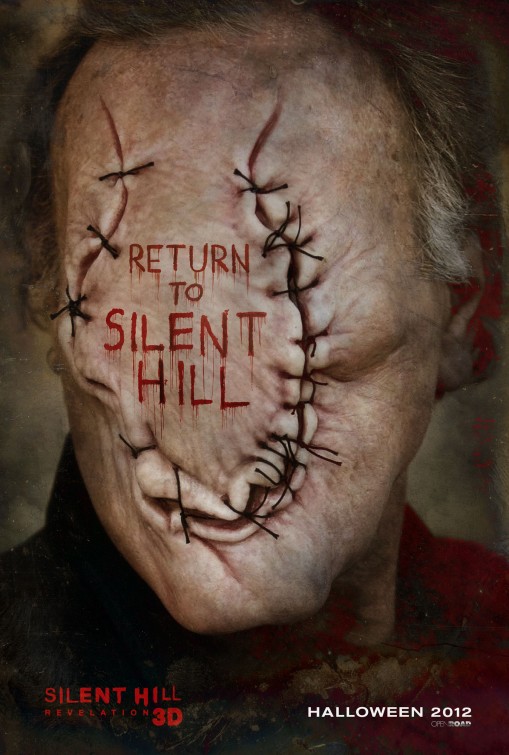
So, roughly five or six years after the first attempt at a Silent Hill movie, here we are again. With a new director and relatively new cast, hopes were high that the new movie, if it ever got off the ground and was actually filmed, would surpass the seemingly-low bar set by the original movie. Nobody really knew what the final outcome would be, though. Any pre-existing expectations were promptly Shot Down In Flames when it was announced that the new Silent Hill movie would be filmed in 3D. So, by this point on, nobody was expecting it to be any good at all. Did the movie deliver on its apparent-guarantee of being yet another mediocre video-game movie? I saw it, and I can clarify that it is actually a decent horror film on its own, and one that won't leave gorehounds or fans of the games disappointed (much).
The first and most important question: How godawful is the 3D? Well, it avoids the technique's worst trapping right off the bat by being actually filmed in 3D as opposed to merely being converted in post-production. The actual use of the 3D, on the other hand, much like the town depicted in the film, constantly teeters between well-done understatement (the snow and ash in the opening scenes, the shifts from the normal world and the darkness) and no-holds-barred face-flying gimmickry (pretty much every scene with any sort of action). If you're going to see the movie at all, it'd probably be best if you saw it in 3D, whether in theaters or the inevitable Blu-Ray 3D release (if you actually own the equipment). A lot of the action scenes, during the more hectic parts, rely unashamedly on throwing a lot of stuff at the viewer's face, sometimes shifting to the main character's point-of-view to shove knives, gore, rusty *insert-object-here*s front-and-center, heading STRAIGHT FOR YOU BECAUSE THIS IS 1970 AND THIS IS TOTALLY SCARY. That's not to say that there aren't some gratuitous 3D scenes done well, such as on one point where a side-character gets his fingers chopped off and the now-offal goes flying in spectacularly gory, 3D fashion. But the majority of the action-oriented 3D is gratuitous, and would most likely screw the movie over completely if viewed in good, old-fashioned 2D.
As far as the whole atmosphere and grotesque-ness of Silent Hill and its shadow-self go, the movie certainly captures it in spades. Heather's reality-shifting experiences early on do a great job of capturing the mood of WHAT THE FUCK IS GOING ON WHY IS EVERYTHING RUSTY HOLY SHIT THAT GUY HAS NO FACE IS THAT A HUMAN BODY BEING SLICED AHHHH. The majority of the second-half of the movie takes place in the corrupted side of Silent Hill, so the atmosphere and aesthetics of the environments and monsters is given plenty of time to shine. Almost too much, it seems, as for all of its attention to the gore and horrific aspects of the movie, every time an interesting plot element comes up, it's run through quickly to get to the next showcase of gore. The gore, by the way, is perfectly gory and the grotesqueries of the monsters come through loud and clear. This is, by no means, a movie for the faint of heart.
Speaking of the plot, it's definitely passable and makes sense for those who have played the games, although it may prove a bit too convoluted for those not familiar with the franchise. Instead of introducing new characters altogether, the two existing characters from the first movie simply change their identities, this time to Heather Mason (Silent Hill 3) and Harry Mason (Silent Hill 1, Shattered Memories). One of the major complaints of the original was that it was dragged out and took too long to really get started. While Revelation has its whole setup, which fleshes out the main characters, this is significantly decreased from the first one, and it gets to the horror in due time. For me, one of the biggest issues of the original movie is that, rather than the town and its monsters shifting to each person and being a representation of that person's personal demons, yada yada yada, everything is just meshed together and generalized into simply being a part of the darkness that Alessa created; Pyramid Head is no longer a personification of James' guilt or sexual addiction, but now is simply Alessa's protector, and so on. This continues in the sequel, with one particularly uncharacteristic act being performed at the climax, but for the most part, it has the structure of the game down pat, though with some liberties being taken, of course.
In closing, although liberties are taken, and the 3D is quite obnoxious, you could certainly do worse than Silent Hill: Revelation 3D. It's certainly better than that *other* video-game-based-survival-horror movie that released not too long ago, and if this film is any implication, the next movie in the series that's set up during the last minute of the film may hold great potential, given the right amount of work and slightly less three-dimensional wankery. If you're a Silent Hill fan, definitely give Revelation a watch. Just make sure you have a strong stomach and a high tolerance of gimmicky 3D.
What's that, you say? You say that Parts 3 through 5 aren't done yet? Well, you see, there's a simple explanation.
I'm a time traveler.
Like this, but with more black coffee and metaphorical cheeseburgers.
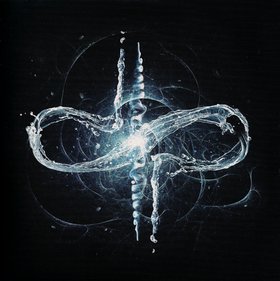
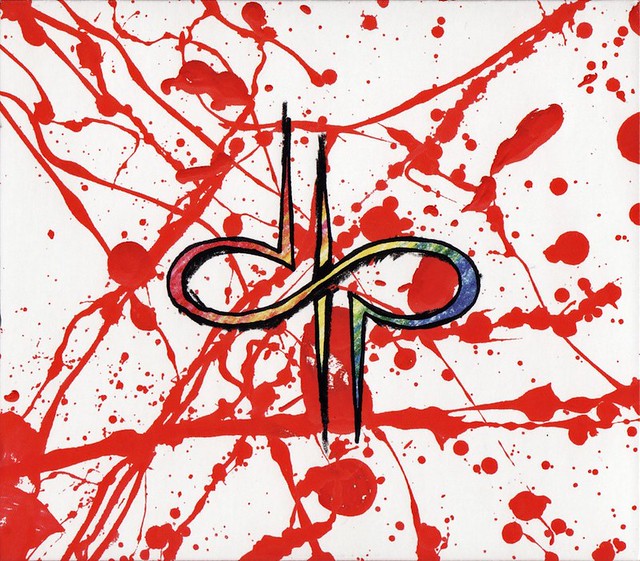
About a month ago, Epicloud released, the fifth entry to Devin's Devin Townsend Project album series. As a tribute to this, I've decided to skip ahead in my admittedly-neglected series and review the four of the five albums consisting of the "story-arc" of the Devin Townsend Project (the name and logo are being kept for branding purposes, and because it'd be a shame to get rid of such a bitchin' logo).
LOOK AT IT.
LOOK AT IT.
LOOK AT IT.
Strap yourselves in, because it's gonna be a wild ride through Devy-land. Our first stop:
KI
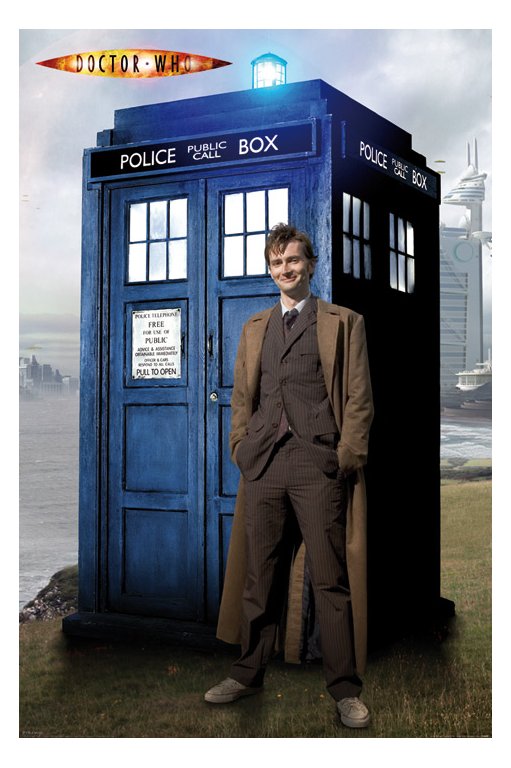
Why don't you hop in the TARDEV and go on a little time-traveling ride with me? It'll be a relatively short one. I promise. Open the door for me, would you? BAM. It's 2007, and Devin Townsend has just announced his intentions to retire from the public eye after releasing the kick-ass metal sci-fi satire opera, Ziltoid the Omniscient. This announcement comes hot on the heels of his disbanding Strapping Young Lad due to a lack of motivation to continue the project any further. He claims that he will continue to produce more solo albums, and intends to do some stuff that's just as heavy as SYL. Now hop on back in the TARDEV, there's a good chap. Get that door for me again? Thanks. It's now 2009, Devin's back from his hiatus and recording albums again under the moniker of Devin Townsend Project, with a whole new group of band members and a shiny new logo to boot.
WE GET IT, STOP ALREADY
According to Devin, the project will be a series of four albums, each with a different musical style and different band members (in the future, this will prove to be inverted due to Ryan Van Poederooyen's involvement in pretty much everything). The first album, Ki, will "set the stage" for the entire project. Even though Devin's pretty much detailed all but the most obvious aspects at this point, nobody really knows what to expect. Will it be as heavy as SYL? Will it be another ambient album? Will it be the reformation of Ocean Machine? Well, the correct answer, as we know back in our home time period of 2012, is D: None of the above. Ki, which was released on May 25, 2009 was revealed to be a mellow, acoustic album with elements of progressive, ambient, blues, and funk, all interspersed with the occasional outbursts of HOLY SHIT METAL. The Devin Townsend Project, for this album, consisted of the man himself, Duris Maxwell on drums (formerly known as Ted Lewis if you're a blues fan), Jean Savoie on bass, Che Dorval on backing vocals, and Dave Young on keyboard/piano.
The fact that Ki turned out to go in this particular direction was somewhat out of left field, but not entirely unexpected. It was common knowledge at the time that Devin was having a hell of a struggle with drug addiction. Thankfully, he managed to face his issues head on, go to rehab, shave the Legendary Skullet of Power (R.I.P.), and begin a journey of self-discovery through music. Of course, it was predicted that after this purge, none of his musical output would be as heavy or as chaotic as songs written before, like the Alien album. But few could have expected Ki to be as mellow and progressive as it was.
Ki is, in essence, a complete musical relation of Devin's life at that point. Yeah, the album's concept is nice, and fittingly pretentious for any sort of prog, but is the music itself any good? Oh, it's a musical journey, and not just if your name is Devin Townsend, but for all listeners.
It begins with a very mellow, beautiful but melancholy instrumental track named A Monday, if the track title helps you envision the atmosphere the song's going for any clearer. This segues into Coast, a bit more upbeat track (and the album's one music video). Coast has a bit of a build to it as far as atmosphere and effects go, culminating with an acoustic chord progression repeating and wait is that an electric guitar coming into focus, oh mY GOD THIS IS HEAVY AS SHI- and it's gone, an acoustic guitar's solitary (very reverb-y, as the acoustics tend to be on a lot of the album) lick interrupting the chaos, bringing an aspect of peace back to the record. The recurring motif of mellow, acoustic vibes being interrupted by bouts of chaos is one of the musical themes of the album. Disruptr (sic) continues the trend of proggy acoustics, building up to another heavy section, but this time it maintains its composure, stopping itself before it loses control. Atmospheres get thicker, reverbs get reverbier, it seems to be doing fine UNTIL- The metal comes in at the full force only hinted at during the ending of Coast, yelling at us (or is it itself?) to "BE A GODDAMN MAN, BOY", until it has an emotional breakdown and returns to the melancholy vibe of A Monday. From there, it builds itself back up, slowly but surely, until it almost throws itself over the edge again, stopping itself suddenly before it does so. The next track, Gato, is a bit more upbeat, and repeats the same theme of acoustics building up into chaos, it losing itself, and building itself back up again, but this time with a few new compositional tricks up its sleeve. I know that it seems like a lot of the tracks so far are the same, but each manages to have its own identity, and is instantly recognizable, even to the casual listener.
The next track is Terminal, another entirely acoustic track, which seems to be the point during the album where it just stops and recollects itself, looking back on past events. Terminal is pretty simplistic as far as the guitar goes, and somewhat mellow, but not quite as obviously melancholy as A Monday. The entire point of this song is the atmosphere, which it brings in spades in the form of a somewhat-hard-to-describe fashion. If I had to describe it, I'd say it was like the combination of a busy airport and a hospital waiting room, both of which happen to bring separate meanings to the title. After this, the album begins anew its seemingly-downward spiral with Heaven's End (named Heaven Send everywhere you look, but the former is the official title according to Devin). Heaven's End is where the album really starts to just give up on itself, not just lyrically but also musically. After the first few minutes of acoustic build, the album starts going into full-on chaos mode for extended amounts of time, repeatedly, even featuring the one real electric guitar solo on the album. Right after it ends, the band talks amongst itself, and IT DIVES RIGHT BACK IN, with another repetition of the chorus section. This segues right into Ain't Never Gonna Win, a jam between the band that sounds mellow, but very funk-inspired, even featuring Devin doing scat vocals at times. The transition between the two tracks seems jarring from the description, but it really does fit rather well. This is followed up by Winter, another simplistic, reverb-y acoustic track focusing on atmosphere rather than musical showmanship. Winter, atmospherically, is moodier than Terminal, and even A Monday, but not as outright melancholic as the latter. It's somewhat upbeat, but dark.
To begin the final third of the album, a train's whistle blows. All aboard! It's time for Trainfire, the most chaotic track on the album. Rather than going for the mellow prog acoustics of the last few tracks, Trainfire starts with... 60s-era Rock 'n' Roll? It sounds like Devin covering a long-lost Elvis Presley song, but then the chorus comes and everything just goes haywire, delving into the most chaotic metal outburst seen on the album. To the listener's surprise, the punishment subsides, leaving only the drums, an acoustic guitar, and Che Dorval's vocals, heard here for the last time on the album. The apparent "muse" of the album fades away, and it is left with only itself to finish its journey. The next track, Lady Helen, is another melancholic song, the first non-interlude track in the album to be entirely acoustic, without collapsing in on itself in a wave of metal. There is also a piano part on this song that adds to its nostalgic quality. The track ends with an almost hopeful section, a reminder to keep its "eyes forward" as it nears its conclusion. The track then becomes an acoustic jam backed entirely by ambience and atmospheric noises with no drums in sort, which then fades into the title track, Ki. Ki is the happiest track on the album, showing that the album has, in a way, made peace with itself, becoming accepting of what it is, for better or for worse. After a few minutes of happy acoustics, it begins a series of sweep-picked arpeggios, as an electric guitar begins to build in the background. But this time, it is not of chaos or mania that the guitar stems from, but rather, ecstasy, in a moment of epiphany. When it reaches full blast, it is heavy, but content, representing the revelation of self-acceptance hinted at earlier. Then... it stops, leading into Quiet Riot, which musically is an acoustic version of the chorus of Cum On Feel The Noize by the band that the song is named after, with different lyrics. A change of pace, sure, but a fitting end to the musical and emotional journey that is Ki. Or... is it? After two minutes of silence, the track Demon League starts up, another short acoustic, atmospherical piece. It is brooding, but, unlike the other tracks with their melancholic air about them, simply unsure of itself. Demon League is a statement of uncertainty and "Where do we go from here?", leaving the rest of the project ambiguous.
That is, until November 17, 2009, on which the second installment of the project was released...
ADDICTED
Ki was musically and conceptually pretty heavy, so to follow it up, Addicted was released, as a sort of delicious dessert after the large meal that preceded it. Addicted is, at its heart, a heavy metal album with an almost pop sensibility to it, not even close to extreme metal like Strapping Young Lad, but not quite hard rock either. This time around, the DTP consisted of Devin, Ryan Van Poederooyen on drums, Brian Waddell on bass, and Anneke Van Giersbergen, formerly of the Swedish prog-rock group The Gathering, on backing vocals, although she gets some prominent solo time over the course of the album. The theme of Addicted is that of celebration, of focusing on the here and now, through the best and worst of times, living life to its fullest, and all of that type of stuff. Seeing as how Addicted is much easier to listen to casually and is more accessible to the general listener, there is no need for a detailed track-by-track analysis here, but the album as a whole has some very consistent themes. As stated before, the album has an air of celebration about it, and even when it's at its heaviest, it continues to revel in the overwhelming joy of life and love. Each track is a standout here, with their own song structures and feels. Addicted! is a heavy-ish song with a driving beat and a shouted chorus, while Supercrush! (a personal favorite of mine and Jama7301's) is almost epic in scope, with Anneke's spine-tinglingly beautiful verses alternating with Devin's soaring choruses. Hyperdrive!, originally a track off of Ziltoid the Omniscient, was remade for this album, with Anneke handling the entire vocal track. This version is slightly more upbeat, and at the end, one small but crucial lyrical change is made when what originally ended the track with "She loves me not" cuts out before the "not" on the remake. In my opinion, both have their own strengths, but technically, the version on Addicted is the superior one. Numbered! is another track that entices shivers from the listener due to the sheer beauty of its chord progressions and one particularly effective bridge section. The album ends with Awake!!, the verse riff of which strongly resembles a riff that a band like Pantera would play (a fact that Devin knowingly pokes fun at, saying "Walk on home, booooyyy!" at one point). This gives way to another haunting chorus driven home by Anneke's vocals, and a bridge with Devin shouting of the importance of living in the now over some chugging. After the first half of the song, the track is slowly but surely deconstructed piece by piece, until all that is left is a repeated clip of Anneke singing that "All the world's a stage" and an ambient pad. Even Anneke's vocals fade away in the end, leaving only Devin, ruminating "And I saw that maybe... there was nothing more?". This ends the album as the ambient pad takes two minutes to fade out, leaving another ambiguous ending for the next installment.
Now that the celebration is over, it's time for the project to go into full steam, facing its issues head-on. After an almost two-year wait, the final two installments of the Project, Deconstruction and Ghost, were released on June 20, 2011.
DECONSTRUCTION
This is it. This is the one that most of Devin's fans were anticipating since the announcement of the DTP. An epic progressive metal album, backed by the Prague Philharmonic Orchestra, an Amsterdam choir, and a large selection of guest musicians from the metal scene (Devin Townsend and Mikael Akerfeldt? Sign me up!) The DTP itself consisted of The Dev pulling triple duty on guitars, vocals, and bass, and Ryan Van Poederooyen and Dirk Verbeuren alternating on drums. The album also featured a rather lengthy list of guest vocalists from various metal bands, all of which have relatively small roles, so don't be scared of Devin having a minimized presence on the album.
The album begins with Praise The Lowered, which at first glance seems like an Addicted B-Side, albeit slightly darker in tone. Then... IT HITS. Electric guitars build in the background in a manner not unlike some tracks on Ki, and a brief moment of buzzing noise accompanied by Devin shouting to "SMOKE THAT FUCKING... WEED, BOY", followed by one of the heaviest singular moments in the album, accompanied by Paul Kuhr of November's Doom growling in the background amidst the choir. After a minute or so of sheer unadulterated chaos, it fades away, leaving only an electronic pad, during which an almost militaristic drum pattern fades in, signaling the beginning of Stand. Most of the song follows the aforementioned marching drums, with the exception of a muted almost ambient section near the middle. The guitars are palm-muted for the first verses, after the first of which a sample of an army marching is set to the rhythm of the drums. Then, after Devin asking if the listener is ready, the guitars come in full-blast as Devin does some shouted vocal lines before going into an amplified version of the verse riff, this time with the choir chanting and Mikael Akerfeldt of Opeth doing some background growls. Then, after an absolutely immense chorus of "STAAAAAAAAAAAAAAAAAAAAAAAAAAAND", a guitar solo is played, followed by a few seconds of marching chaos, and suddenly... silence. Devin does an almost whispered vocal passage among some background noises before the guitars fade back in, doing a breakdown with an interesting time-signature before going back into "STAAAAAAAAAAAAAAAAAAAAAAAAAAAND". After a repetition of the chorus section, the almost 10-minute track comes to a close to some objects whirring about, followed by Devin screaming, signaling the beginning of Juular, the album's one (official) single.
Juular is a very fast-paced track with a frantic but contained drum pattern maintained throughout the track. Devin's verses here are very sing-alongy, but in a demented way. I've seen people online comparing this track to what would happen if Tim Burton started doing metal, and I'm obliged to agree with that statement. After two verses, growling vocals from the character of Juular are done by none other than Ihsahn (of Emperor and his own solo project). According to Devin, the concept of this song within the album is that of the protagonist's encounter with a religious zealot, living an ascetic lifestyle of blowing into a jug for all eternity in atonement for his sins. Ihsahn plays the part rather well, even if it's a bit out of left field for anyone familiar with his solo work. The orchestra and choir on this track just keep building through the duration, culminating during the last minute of the track when everything descends into madness, the bridge riff progression is repeated once more, and it fades away, leaving only the beginnings of a twinkling keyboard in its wake. This keyboard gives rise to Planet of the Apes, another 10-minute piece. The first half of the song seems to be both a parody and a tribute to djent, one of the newer sub-subgenres to be popularized in the scene by bands such as Meshuggah and Periphery. What seals the deal is near the second quarter of the song, when Devin shouts "While we all have lots of bands who influence still, we all rip off Meshuggah!" The orchestra does a stellar performance on this track in particular, especially during the second half. After the djent section comes to an end, the song seems to chill out a bit, going into an almost-but-not-quite happy-sounding section before diving right back into the djent-inspired heaviness, with Tommy Giles Rogers from Between The Buried And Me doing some kickass growling vocals over top. After a repetition of this and a descending picking passage with the choir singing "Jesus, Jihad, Jesus, Jihad...", the song goes into a somewhat surreal passage with the drums going at full speed ahead, just as in Juular, but with only a sole guitar doing some tremolo picking and Devin singing. This goes into the recurring lyrical motif that "One is all collective, tungsten body, glowing mind" as the orchestra kicks into gear with some of the best work on the album. There's even a techno-synth at one point. The song nears its end when Devin, ever the sarcastic, interrupts the choir by yelling "WANK" before playing a solo that is, indeed, masturbatory, but purposefully so. After a few more repetitions of the "One is all collective" line, the song ends.
Directly after Planet of the Apes comes to a halt, in comes Sumeria, the promo-single-of-sorts that leaked on a radio station before the album released. This song, while not as outright djent as its predecessor, does somewhat follow in the same vein in a shorter amount of time. Much of the middle section is based around a certain breakdown with the vocal stylings of Joe Duplantier (Gojira). The choir is showcased as well, especially during the pre-chorus and chorus. After the last repetition of the pre-chorus, the song abruptly ends with a xylophone melody and Paul Masvidal of Cynic singing. This brief section is the only respite from the chaos in the entire album. Next comes the album's centerpiece track, a monumental progressive metal track, dare I say, one of the most over-the-top songs in the entire genre, but also an acknowledgement of just how damn wanky the prog metal genre can be. A song of this nature can only have one title worthy of its glory, and that title is... The Mighty Masturbator.
The Mighty Masturbator begins simply enough, with a minute or so of a single acoustic guitar and Devin singing, as the orchestra begins to fade in. Then... BAM. The orchesta, choir, and the rest of the band come in full blast, with a call-back to the bridge section of Numbered! off of Addicted, albeit heavier, crazier, and with extended lyrics. After a few like-minded riffs (including one absolutely bad-ass section, "Now, comes the time, where the night speaks to me..." etc.) before fading out to the sounds of a man... relieving himself as another character begins ranting on his abilities to save the world, complete with his "saving-the-world-boots" before a bat-shit insane complex series of arpeggios begins, with Devin now singing as the Save-The-World character. After a repetition, the guitars fade into the background and the choir begins to scat, lending an almost carnival atmosphere to the section before returning to the main structure. After a few other arpeggios, Devin's vocals are interrupted by a man who may or may not be Ziltoid the Omniscient reciting the values of Pi, but getting stuck at the second digit. This goes into a weird-ass ambient electronic section which gives way to AN ALIEN RAVE WITH THE LEADER OF THE RAVE RANTING ABOUT ACCEPTANCE INTO THE INTERGALACTIC COMMUNITY. HOLY SHIT. This goes into a vaugely-raveish section with the remaining people chanting "Give it up... your world... give it up... your world, world, world, world" that is as catchy as it is jarring, especially with a little off-timing beeping rhythm that Devin put in the section maybe to screw with the listeners, I don't know. But it works. After a minute or so, Greg Puciato (The Dillinger Escape Plan) starts ranting about how the people PRAISE GAAAAAHHHHHDDD, which after a countered section from Devin, a section which I would not mind listening to if it alone as as long as this whole middle section) before Greg switches to WE PRAISE OURSELVEEEEESSSSSSSSSS, countered by another, slightly different vocal section from Devin, and then the entire thing just goes even more bat-shit insane than it already is, with the orchestra and instrumental lines taking a turn for the sinister as Greg brings the middle section home with a cry of WE PRAISE SAAAAAAATAAAAAAAAAAAAAAN before Greg retreats from the conflict, their one shot at salvation now completely destroyed. This fades out... and is interrupted by Devin, doing vocals for the leader of humanity now, urging his followers to follow him into the stars. This whole section is really proggy, switching between 4/4 and 5/4 timesigs on a dime, sometimes with a mini-guitar solo interjected for good measure, switching back to Greg for 30 seconds or so, before rounding it up with... ZILTOID THE OMNISCIENT. After a heavy guitar section that seems to be building up to something heavy as a really heavy thing, it goes into... CARNIVAL MUSIC.Well, not quite, it's a remake of The Infinite Waltz section off of Procession from the Christeen + 4 Demos EP with a full orchestra and choir, with Ziltoid nonsensically ranting over it all "See the man with seventeen testicles! Two for one! Indeed!" before proclaiming his status as The Mightyyyyyy Masturbatoooorrrrr! This behemoth of a masterpiece ends with one final and quite lengthy AMEN from the choir and orchestra.
From this point on, the album goes into completely chaotic and unpredictable mode, starting off with Pandemic. Pandemic is another short track, almost like Juular on a cocktail of cocaine and amphetamines. Floor Jansen (After Forever, ReVamp) does some vocals on this track which are just stellar. On the twenty seconds or so of her total time on the song, those twenty seconds are probably the best seconds of the song. The rule on this track is EARRAPE and MINDRAPE at the same time. Seriously, it's that dense. At one point it even goes into a ridiculous solo, not ridiculous in its technicality, but in its melody and its time signature of godknowswhat/8 before going into a techical solo. The song ends once the intro is reprised, just as chaotic and blastbeat-y as ever. Suddenly, the delicious sounds of a man with diarrhea flows forth from the listener's headphones, signaling the arrival of Deconstruction, the 9-minute title track and the song that got your humble narrator into the wacky world of Devland. There is simply no other way to describe this track other than gloriously bat-shit insane. From the random outbursts from the choir about SEX, POVERTY, MONEY, and an awesomely-misemphasized HAPPINESS (you'll know what I mean when you hear it), to Oderus Urungus of GWAR's speech on the purpose of life, said in almost-Ziltoidian fashion, to the endless waves of guitar sweeps and other forms of madness/wankery that accent and follow it. Eventually, this gives way to Devin's realization that... "GOOD LORD, IT'S A CHEESEBURGER! A DOUBLE!", which results in the orchestra and choir singing hymns about said cheeseburger, which is said to hold the secrets of the universe between its buns. All of this proves to be simply too much, however, as Devin exclaims "But I don't eat the cheeseburgers, guys, I'm a vegi-ma-tarian" before the batshit insanity of the last few minutes returns in full blast, with Devin ranting on the left sound channel about everything imaginable while a sped-up conversation clip plays in the right, effectively producing an overload on the unwary listener, all while Frederik Thordendal of Meshuggah does his guest solo. After this, everything fades out, only to slowly build up again, but this time, the crescendo is triumphant and euphoric in nature, with Devy breaking out his high vocals in breathtaking fashion. The true statement of the song, and indeed the album, is revealed: "Take your time, enjoy the ride". As climactic as this statement and everything preceding it may seem, this is not the end. During the fade-out, Devin exclaims "Let's finish this!", marking the final song on the record, Poltergeist. Of all the songs on the record, Poltergeist is one of the most straight-forward tracks, behind Juular. The first half of the song is an ever-shifting structure, including the choir and orchestra in top form as glorious metalized insanity is distilled to a more pure form as Devin shouts about how "Everybody wants to be the next one to bow... you'd let your mother fall on dowwwwwn!" After the first minute, the song takes a more traditional structure of verse-chorus-verse, with the chorus being a singular chant of "DIEEEEEEE, POLTERGEIST!!" and "GIVE UNTO ME!!!!! WAIT-", perhaps a signal that Devin is not quite ready to destroy this particular aspect of himself yet. The second half of the song is more epic and orchestra-focused, with the choir doing one of their more memorable vocal lines in the album, first a stand-alone verse, before Devin kicks in, shouting about "There's glory to the brave!" and the choir goes full chord-accent mode. The final seconds of the song are Devin making one final exclamation: "STAAAAAAAAAAAAAAAAAAAAAND!". And with that, the album ends.
This is the average listener's brain after their first listen to this album.
So, that's Deconstruction, possibly the heaviest and most epic of Devin's career, surpassing even Strapping Young Lad in its chaos and grandeur. After this behemoth of an album, one may be wondering what the hell kind of demented madness Devin saved up for last, the partner album, so to speak, of Deconstruction, seeing that both albums were released on the same day, June 20, 2011. Well, loyal Devheads were in for a treat as they bore witness to what is up for debate as an EVEN HEAVIER offering, picking up right where Poltergeist left off, in the shitstorm of internal struggle and euphoric revelation, augmented by Ziltoid and god knows what other guest musicians. Fans everywhere would find the epic, balls-out, no-holds-barred conclusion of the Devin Townsend Project in...
GHOST
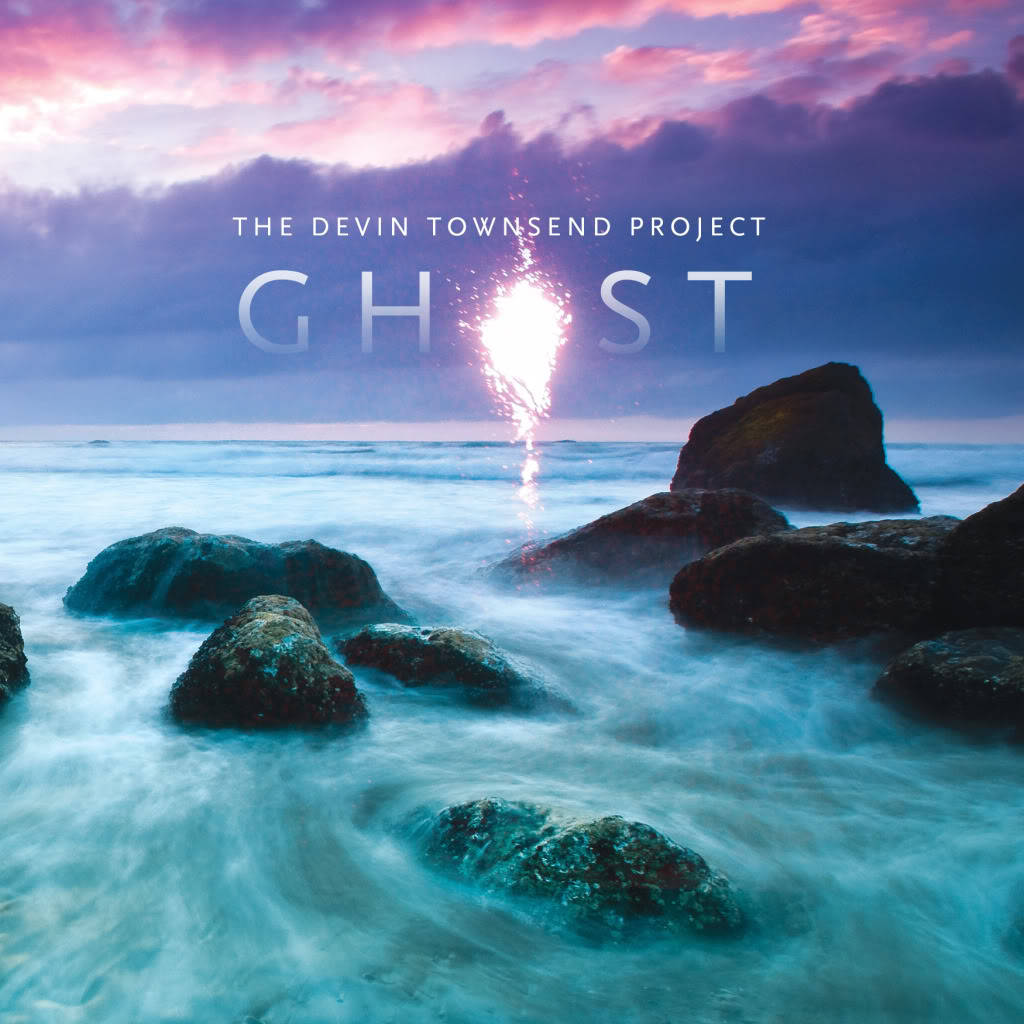
Right up there with Carcass and *insert underground Goregrind act here* for br00tvlest album cover ever.
Clearly, the only way that Devin could go from the metal mania that was Deconstruction was to start playing Raw Black Metal! So get your hymnes to Satanas that you ripped off some website, light those Party City black candles, and put on your Dimmu Borgir or whatever shitty cheese-black shirt you own, because you're about be blown straight to Norway at midnight during a blizzard faster than you can say Nattens Madr-
Wait a minute, this doesn't sound kvlt at all! It sounds like... *shudders*... NEW-AGE!
Welp, that is EXACTLY what this is. Pretty unexpected, huh?
After an album like Deconstruction, it makes sense to give the listener some breathing room in the DTP, some source of light to counter the darkness. Seeing that Deconstruction and Ghost released on the same day, it actually works really well. Decon and Ghost comprise one whole of the conclusion of the Devin Townsend Project. In case you have a short-term memory, let's recap: By the end of Deconstruction, the protagonist-that-is-totally-not-a-stand-in-for-Devin-himself had finally found a decent reason that existence is: That there is no reason that affects us in any way, and all we can truly do is enjoy the ride for all it's worth. He tries to destroy his ingrained darker spirit, the poltergeist of the angst and trauma that brought forth Strapping Young Lad and all of his mental anguish contained therein, only to be held back by his consciousness (the repeated shouts of "Wait" during the chorus), and when he is finally about to slay this demon that has haunted him for so long, the album ends on a cliffhanger. Ghost, in case you aren't able to put two and two together, is the continuation of this story, just not in the way you were likely expecting. Instead of the chaos marking the frantic internal struggles and battles with personal demons, Ghost marks the state of being completely at peace, content, and accepting of oneself, regardless of any personality flaws apparent. The final statement of the album "Might as well marry the ghost", sums it up perfectly. Instead of slaying the poltergeist that Devin has hunted for so long, he realizes that, for better or for worse, it is a part of him, and he cannot bring himself to strike out this aspect of his personality for good. He marries it, so to speak, accepting that it is one aspect of himself, one part comprising the whole, and without that part, he would be incomplete. In this way, Ghost is the true conclusion to the life-story detailed throughout the DTP.
This album also marks a journey full-circle musically, as before Devin became a teenager and got into Def Leppard and other 80s metal bands, he was a big fan of new-age music, in particular, the 60s duo Emerald Web. So, what better way to represent a full-circle of this type than to return to the roots? For this album, Devin got flautist Kat Epple (of the aforementioned Emerald Web) to do what she does best, and it really shows. Kat focuses not on technicalities, but on the atmospheres and soundscapes created with her sound, as any true new-age performer would do. Her flute adds an almost ethereal sound to Devin's already-beautiful song arrangements. Devin utilizes padded synths, acoustic guitars, and his own vocal styles to flesh out the songs, and, even though this is new-age, it's new-age done Devy style, so don't expect anything short of Devin's full producing capabilities used as a force for atmosphere and beauty rather than sheer chaos. To put a head on the whole full-circle motif, the last track, As You Were, ends with a reprise of A Monday from Ki, albeit in a much more atmospheric and less melancholy fashion.
Ghost, much like Addicted, is a singular musical statement brought to fruition through an entire album. Instead of the song-by-song story progression done by Ki and Deconstruction, Ghost is content to simply be, reveling in the newfound peace of mind and joy. Although the album is not without its darker moments (Dark Matters), the majority and whole of Ghost is an ethereal, almost nostalgic trip through the sunshine of peace and love, and if you have any sort of a soul at all, you will almost definitely be left with a warm and fuzzy feeling inside after the album is done.
Thus ends the Devin Townsend Project cycle. Over the course of four albums, the series takes listeners to joyous celebrations, dark abysses, and everywhere in between. Every single album is a testament to Devin's musical ability and versatility (not to mention his skill as a producer!), able to evoke the emotions that the music tries to convey almost effortlessly. The Devin Townsend Project, although not widely-known at all, unfortunately, is sure to go down in history as one of the greatest music album cycles of the 21st century, and certainly the greatest thus far.
Editor's Note: Epicloud, while retaining the branding of the Devin Townsend Project, is not truly an entry into the main story-arc. Devin has also stated that Epicloud will be the last album under the DTP moniker, with Casualties of Cool and Ziltoid 2 being released under Devin Townsend. My review of Epicloud and Epiclouder will comprise Artist Showcase: Part 7, but I should probably return to my normal time period and do parts 3-5 first.
So, in the last part of this artist showcase, we began with the really early releases of varying quality, but it was in 1997 that Devin began the endless flow of amazing albums that persists to this day. It all began with...
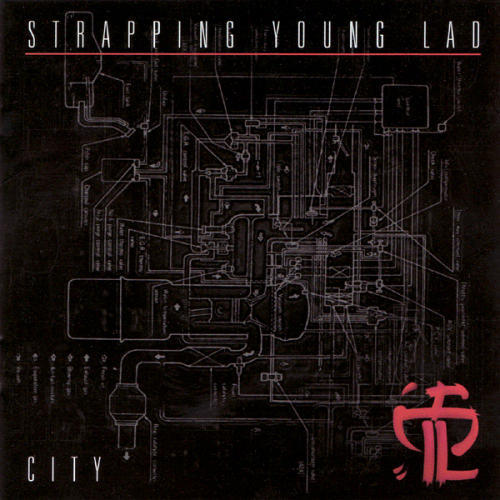
STRAPPING YOUNG LAD - CITY
It was after the release of Heavy As A Really Heavy Thing that Devin began getting offers to tour, which obviously required a few other people to perform in the band, because performing live as a one-man project is hard, y'know?
Take it from Varg, it's best to not even bother.
After the touring, the lineup that Devin had brought together somehow stuck, and it ended up being the permanent lineup for Strapping Young Lad. This lineup included Jed Simon returning on guitar (naturally), Byron Stroud, formerly of a little-known band named Caustic Thought, on bass duty, and Gene Hoglan, previously playing for Death and Death Angel, on drums.
AKA The Human Drum Machine. C'mon, try to tell me that that's all natural fat after years of playing some of the best and most technical metal drumming ever.
With City, SYL took the industrial influence from HaaRHT and went all out with it, even going as far as to cover a Cop Shoot Cop song, while still maintaining the signature GLORIOUS EARRAPE sound that they were becoming known for. City was released on February 11th, 1997, and to this day has a reputation as one of the best industrial metal albums ever. It was SYL's most industrial release, while also being their most thrashy. It would also be arguably their most popular release, due in part to the music video produced for Detox, and many songs from it becoming concert staples. To this day, you'd be hard-pressed to find any extreme metal album rivaling the sheer chaos and extremity of City.
The beat starts here.
Never has there been a song title that so accurately reflected the listener's response.
After releasing such a magnificent slab of ear-bleeding madness, one'd probably be left wondering "Where do they go from here? How could Devin possibly top himself now?"
Well...
OCEAN MACHINE - BIOMECH
This album is where the Great Divide between Strapping Young Lad fans and Devin Townsend fans began. Ocean Machine was a short-lived project, much like Punky Bruster, that made one album and promptly vanished. Fronted by Devin, as per the norm, Ocean Machine had JR Harder (from the aforementioned Punky Bruster) on bass and Marty Chapman (who seems to have dropped off the face of the music industry after this album) on drums. While nowhere near as brutal or technical as Strapping Young Lad, Devin maintained the attention to detail, utilizing the Wall of Sound technique in an entirely different manner. Some of Devin's best songwriting throughout his career can be seen on this album, with the music forming a loose concept of life, death, and someplace in between. Some songs are upbeat and almost poppy (how Life never became a #1 Single still escapes me), while others are moodier and more epic in scope (the ending trifecta of songs, but more on that in a moment). Some of the songs lead into each other, and some have intro tracks of their own to segue between the last track and the next. Near the end of the album, it hits you. The Holy Trinity of Ocean Machine: Funeral, Bastard, and The Death Of Music. Each of these three tracks is around ten minutes in length, and each flows into the next, creating a trilogy of sorts.
Funeral starts things off in an upbeat-ish manner. While not quite as upbeat as Life, Funeral maintains the enchanting, almost dream-like quality of the album. That track alone is a musical journey, but the trilogy still has two songs to go. Next up comes Bastard, a track separated into two parts, according to the booklet. The first half revolves around a riff much darker than that of its predecessor, evoking the atmosphere of a rainy night in the city. The second half almost seems like a light at the end of a tunnel, and just when things start to really get going, it fades into The Death of Music, a 12 minute ambient opus, driven almost entirely by a basic computerized beat, various samples, and Devin's vocals. Devin's vocal performance on this track needs to be heard to be believed, showcasing all of his abilities and creating the most emotionally-resonant track on the album. Although it sounds repetitive from this description, the song is just so all-encompassing that one is drawn into its atmosphere, transferring itself to the listener by its end.
After The Death Of Music ends, an (originally) hidden track, Things Beyond Things begins to close off the album. Things Beyond Things is a simple song, written around a basic set of chords and Devin's vocals. It's a great way to close off the experience that is Ocean Machine - Biomech, ending the album with a peaceful rumination on the events of the album, ending with the statement that "these things inside are all just things". The journey is at an end, and all is well... or is it?
Ocean Machine is one of the greatest non-70s-prog-style Prog Rock albums ever released in my humble opinion. This is just one of those albums that words don't do justice to at all, and needs to be experienced in full to realize the magnitude of it all.
And so we cover another small, but VERY important chunk of Devin Townsend's discography. As is apparent, Devin's road to musical greatness truly kicks off at this point in his career, setting the stage for DOZENS OF ALBUMS, EACH MORE GLORIOUS THAN THE LAST AHHHHHH
The Company of Myself is in indie flash game developed by 2DArray. The game describes itself as "a story about a hermit", but the story proves to be far deeper and certainly far more emotional than its description would lead one to believe.
To start things off, this game is, without a better word... morose. The soundtrack is almost-but-not-quite minimalist, and quite somber. The text that appears onscreen during and after the levels is often haunting and adds to the plight of the "hermit", although it occasionally throws in some fourth-wall related humour to break up the stream of sorrow, which is a fantastic notion, but simply doesn't work as well as it should in the context of an otherwise stark experience.
The game itself is a sort of hybrid of platforming and puzzle elements. The gimmick in The Company of Myself is that the player can press the space bar to return to the start point, with a clone performing the player's actions up until the point in time that the space bar was pressed. These clones cannot be controlled, but can be manipulated in a variety of ways. The puzzles themselves are middle-of-the-road in terms of challenge, no cakewalk, but not "I haven't a clue what I'm supposed to do here" calibre. Despite this, the puzzles are quite fun as a whole, although the final puzzle in particular abandons all types of strategy and manipulation in favour of a far simpler and more mind-numbing solution.
The gameplay, as engaging as it is, takes a definite back seat to the story. Without any spoilers, let me just say that the story is quite depressing, with a moment that puts Portal's infamous Weighted Companion Cube to shame. The ending is shocking, putting all of your past actions in an entirely different and darker light, to haunting effect.
If you enjoy platformers/puzzles and aren't on the verge of suicide, The Company of Myself is, by all accounts, worth a play.
You can play The Company of Myself at http://www.kongregate.com/games/2DArray/the-company-of-myself
The FPS genre, as a whole, is crowded with shit, plain and simple. Even though I acknowledge that this has always been the case, far too many developers are dumbing down their once-great series or making pointless sequels that only serve to destroy the legacy of a genuinely great series, all for the sake of more sales. I know that sales are important, not only to provide funds for future developments but also for the sake of the studio staying afloat, but sales alone should NEVER be the whole reason for a product's existence. Take Call of Duty, for example. Every game in the series has been nothing more than a new coat of paint over an increasingly-tired formula, that is fancy-looking setpieces and mindless multiplayer for the proletarian masses, rereleased every single year with some new colours and shiny new additions that do absolutely nothing. Regardless of its lack of quality, each title in the series is the highest-selling game of all time, year after year. The absolutely preposterous amount of sales inspires every other major studio to attempt to get a piece of the action, so rather than make a product with some degree of actual quality, they churn out endless CoD-ripoffs which kill any sort of creativity in the genre, forcing it to rot away into eventual oblivion. This is not the way that FPSs should be. All of the big companies in the industry are whores, and the few games that are quality releases are pushed aside as niche titles while everyone makes way for Brown-And-Grey Corridor Target Practice 9.
That's the state of the industry right now, and here's how to fix it.
To me, the three most defining factors that all video games should be developed upon are Quality, Challenge, and Fun. Let me go into more depth on these tenets:
Quality: Make sure the game is well-developed and has loads of replayability and content. All game developers should strive for adding something new and innovative to their game, because owning twenty games and having all of them be, for all intents and purposes, the same is never fun.
Challenge: The game should be genuinely challenging. Yeah, you can add easier difficulties for accessibility and what-not, but the game as it's meant to be played should challenge the player, make him think outside of the box, and not merely in "THIS GUY TAKES MORE BULLETS TO KILL" logic.
Fun: Do I really need to explain this one? The whole point of a video game is for entertainment and fun. If your game stays true to the first two tenets but abandons this one, your product is a failure. This is the most important of the three tenets.
At this point, I'm just gonna talk about my idea for an FPS that, in my opinion, exemplifies everything that an FPS, and a video game in general should be.
My concept for a game: An FPS that gives you a whole range of superpower-equivalent abilities, like time control, temporary invisibility, flight, and all that good stuff, and then proceeds to challenge the player's skills with these abilities. Linearity would be thrown to the wolves in favor of pure, unadulterated choice. There would also be more additions to the gameplay that would not only be technically astounding but would also actually add to the gameplay, rather than being a simple gimmick. Some of these ideas include an extreme amount of customization in weapons, uniforms/costumes (Potential disguises), and the ability to control each gun's aim individually while dual-wielding. The storyline would have the same basic gist no matter what, but the events, and as a result, the levels and the gameplay would be entirely dynamic.
An ideal section of the game would be like this: There's a hostage that must be rescued before he's taken to a interrogation/torture facility. You're within a few miles of an airport, where the hostage is being taken to in the back of a heavily-armed-but-not-so-armored enemy vehicle. Potentially, you could shoot out the tires of the car, kill the guards and bring the hostage back to safety, but a more probably outcome would be that the impact causes the car to flip or crash, killing everyone, the hostage included. In this way, the player would be truly challenged, as he is forced to come up with genuinely out-of-the-box solutions. One solution would have the player placing some sort of barricade to stop the car momentarily, and then shooting out the tires, causing the guards to exit the vehicle, at which point the player could lure the guards to isolation and then knock them out or kill them, and another solution would be entirely-based on luck or nanosecond-perfect timing, as the player could rush the vehicle, flying on top of it, cutting a hole into the back, very quickly jumping in and grabbing the hostage, flying out and shooting the fuel tank of the vehicle while flying out. However, since the fuel tank is on the bottom of the vehicle, and there's no exact way to tell its location, much less while flying away from it at so-and-so miles-per-hour, so this approach would require either an acute knowledge of the vehicle or sheer luck, making it much less practical, but not impossible (Pretty much badass mode). If the player was to fail to rescue the hostage before the car gets to the airport, there would still be chances at the airport, or even on the plane itself. Let's say that the hostage was forced onto the plane, and the plane is preparing for takeoff. Potentially, you could stealth/fight/whatever your way to the control tower about a few thousand feet away and either force the traffic controller to convince the pilot of the plane that the conditions are unsafe and postpone the flight, or you could kill the traffic controller and get on the mic yourself, using either persuasion or bluffs to call off the flight, or if you really have a way with words, to relinquish the hostage. The success rate of the latter option is lower, but could potentially have stronger results if it does succeed. This is all a variable, however, as the entire thing depends on whether the player makes it to the control tower in time. The player could also do the dirty work himself, either hitching a ride on the plane using stealth, or fly with the plane, at which point the player could do whatever he wants to do. You could enter through one of the bottom shafts, use stealth to knock out/kill the guards and soldiers, and meet up with the hostage, all while never disturbing or alerting the pilot to your presence. At this point, you could wait with the hostage until the plane lands, at which point a whole other set of choices appears. You could knock out/kill the pilot, take control of the plane and fly it back to the previous airport to free the hostage. Potentially, you could do the exact same while the plane is in flight, but the risk factor is much higher, as you never know which buttons the pilot's body could lean on and press, or which way his body will tilt while holding on to the steering wheel. If the player feels he has the experience to counteract whichever consequence of his actions results from his elimination of the pilot, then he can go ahead and do whatever. Or conversely, the player could go loose-cannon, fly on the top of the plane as it takes off, sabotage it by disabling the propellers or jamming the ailerons, whichever way the player chooses to sabotage the plane, and then quickly force his way in, grab the hostage and a parachute and jump out, leaving an active grenade as a going-away present. But should the plane be destroyed or disabled while the player is parachuting out with the hostage or whatever, there's always the chance that the resulting debris falling from the sky could strike the player or the parachute, potentially wounding or killing one or both of the people. There's also the matter of if the player fails to rescue the hostage at all. In this concept of a game, decisions and outcomes play a major part of the story, as well as which direction the gameplay goes for the next mission. If the hostage is tortured, he will almost certainly let slip some very important details about the location of some very important buildings. If this happens, the next mission will take place at one of these buildings, as the player (and the rest of his army/group/whatever, depending on the location) must defend the building from a HOLYSHIT amount of enemies. If the player rescues the hostage using more stealthy and restrained methods, the next mission could be an infiltration mission, and if the player goes loose-cannon, the next mission could be a sabotage or destruction mission. No matter the type of mission, each mission would have the same level of choice as the scenario described above.
The point of the game as a whole would be to give the player some great new tools for him to experiment with and have fun using, and then to challenge the player to use them to the best of his ability, each time pushing the limits of what was thought possible in the game. It would have a shitton of replayability and quality content, it would be accessible to the new players on easier difficulties, but would be truly challenging in the best way that a game can be challenging on the hardest difficulty, and most importantly, it would be fun as hell. After all, isn't being fun what games are all about?
The Three Tenets of game design detailed above should be the most important things for all game developers, yet very few FPSs nowadays actually keep them in mind, while most forsake them for the sake of gaining the most amount of money with the least amount of work. Games should be games, not products. It's time something changed.
Anyone who played games in the 90s, and early 00s recognizes Squaresoft. Always known for their stellar RPGs like the Final Fantasy series and the Mana series, Squaresoft had a certain consistence in its library. All top-notch games, all JRPGs. Until 1997, that is, when after the release of Final Fantasy VII, Squaresoft decided to develop something different, something completely unexpected fron the famed RPG-developers.
A shoot-em-up. A sidescrolling shmup with retro difficulty and gameplay, but with super-detailed 3D models and textures. It would feature hulking bosses, a still-innovative and original weapons system, five different ships, each adding a new spin on the gameplay, and a level of control seldom seen in 2D shmups. It was to be the most technologically-advanced shooter of its time.
It would be called... Einhänder.
GAMEPLAY:
The gameplay in Einhänder is pretty much what you'd expect from a 2D shmup. You move vertically and horizontally, shoot things, collect power-ups, and shoot more things. However, Einhänder adds some new features that were unparalleled at the time, and (considering the decline of the 2d-shmup market since those times), are still relatively so today. You have the ability to change your speed on the fly by using the L2 and R2 buttons, which can be really useful in the flow of the game, when one minute you're fighting a boss, dodging waves upon waves of bullets, and the next you're fighting a horde of enemies that takes up the entire right half of the screen. In addition, you have the ability to steal the weapons off of an enemy ship (although you'll always have your main machinegun fire), which is one of the game's main gimmicks. The weapons are quite varied, both in style and usability. There's a Spreader, which... is a Spread Gun, obviously, a W.A.S.P, which fires homing rockets, a Riot gun which shoots powerful bolts of lightning that can be charged manually, a Vulcan minigun, which is quite weak, but is superb for taking out hordes of smaller enemies, and a LASER SWORD, among many others. With the manipulator arm, you can change the perspective of any alternate gun you pick up, such as using the Spreader as a rear attack. There are five different ships in Einhänder, each adding a different twist on the gameplay. On one ship, you can hold three different alternate guns and switch between them at will, but on another, you only have one gun slot that is upgradeable. Yes, the changes are on the smaller side, but it does add that extra bit of variety to the game. There is a score system that rewards you points for kills and all the normal things, but it also gives multipliers for killing things quickly. Once you stop killing, the multiplier starts to decrease. It's a fun little system.
AESTHETICA:
The graphics in Einhänder are great for their time. Each model is highly detailed, the futuristic art style pops, and the textures are quite well-drawn. It is also worth mentioning that throughout the game, there are various camera shifts, which are executed seamlessly and do nothing to change the general gameplay, although it does highlight the at-the-time great graphics. The sound effects are varied, detailed, and used well. The game's soundtrack is top-notch, being an energetic mix of techno, fast and frantic during boss fights, and more subdued when need be. Unfortunately, the OST was only released in Japan and is relatively costly to import, and the game disc itself has no redbook audio.
STORY:
The story in Einhänder is actually fairly decent for a shmup, even though predictably, it's relagated to the backstory. A colony on the moon, Selene, is fighting for independence from its Empire on Earth. As a last resort, the Selenian army developed prototype manned tactical fighters, codenamed Einhänder, to be used for suicide runs on the Empire, doing as much damage as they can before they are destroyed. You are one of the pilots of these ships, sent to Earth to do as much damage as you can before you're shot down. It's more fleshed-out in the manual, but that's pretty much the gist of it, and as per the norm, it's just a backdrop to shooting things.
REPLAYABILITY:
The game, regrettably, is a bit on the short side. I'd estimate the game length at around an hour and a half. It's even more regrettable that the game lacks a 2-player mode, which would have made the game absolutely flawless in my eyes. As mentioned before, there are five ships in the game, two of which you need to unlock. There's a score system, three different difficulties, and a gallery of concept art and models that you unlock things in by progressing through the game. Einhänder is of an older time, so not as many bells-and-whistles were implemented. The terms are simple, but you can get a lot of replayability out of this game.
OVERALL:
Einhänder is definitely one of the best non-RPG Squaresoft games. If you like old-school shmups like Gradius and R-Type, definitely track this one down. It's one of the lesser-known gems in the PSX library and, although somewhat hard to find, it is totally worth it if you crave retro action, shmups, or just well-executed action games, pick Einhänder up.